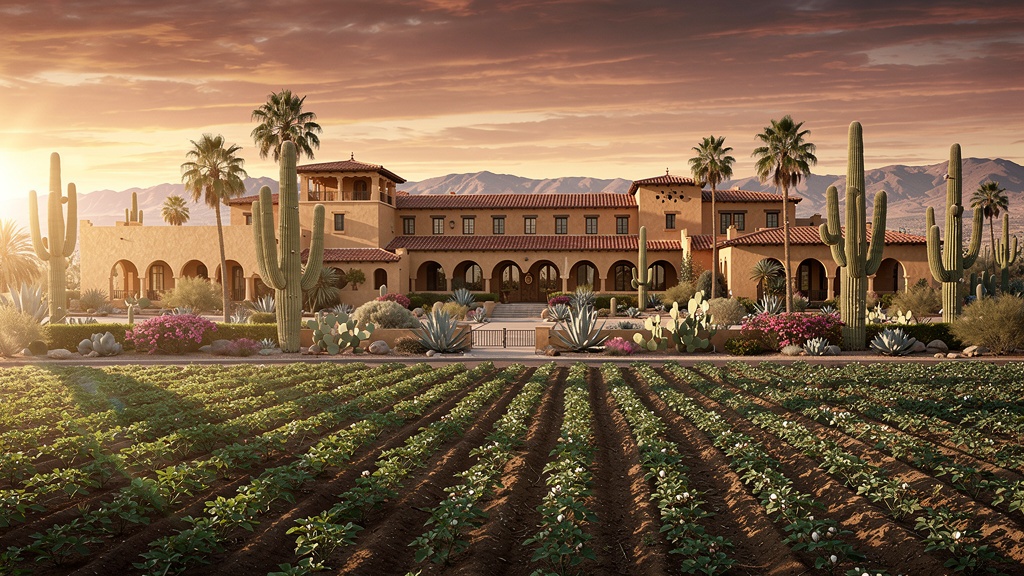
Most Arizona boomtowns were built on silver or copper. Litchfield Park was built on something far more unusual: the finest long-staple cotton in the world — and the visionary stubbornness of one of America's most ambitious industrialists.
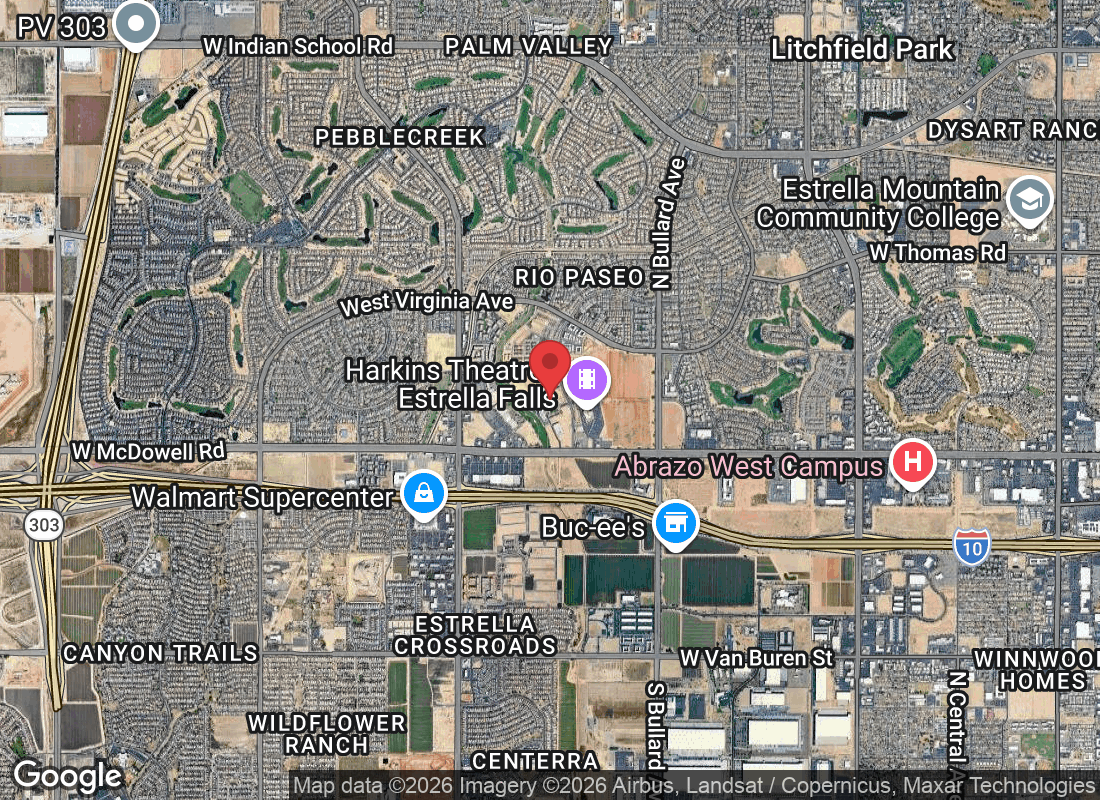
Drive west from Phoenix on Interstate 10 and, just past the sprawl of Goodyear, you'll reach a community that feels genuinely different from its West Valley neighbors. Streets are wide and shaded by mature trees. A grand Spanish Colonial Revival resort sits behind wrought-iron gates. A walkable, human-scaled downtown cluster of boutiques, restaurants, and galleries occupies low-slung buildings that evoke another era. This is Litchfield Park, Arizona — and its history is among the most distinctive in the entire Sonoran Desert.
The story begins not in Arizona at all, but in Akron, Ohio, during the anxious months of 1916, when a nation bracing for war needed rubber — and the rubber industry suddenly needed cotton it couldn't reliably source.
Why Paul Litchfield Came to the Desert
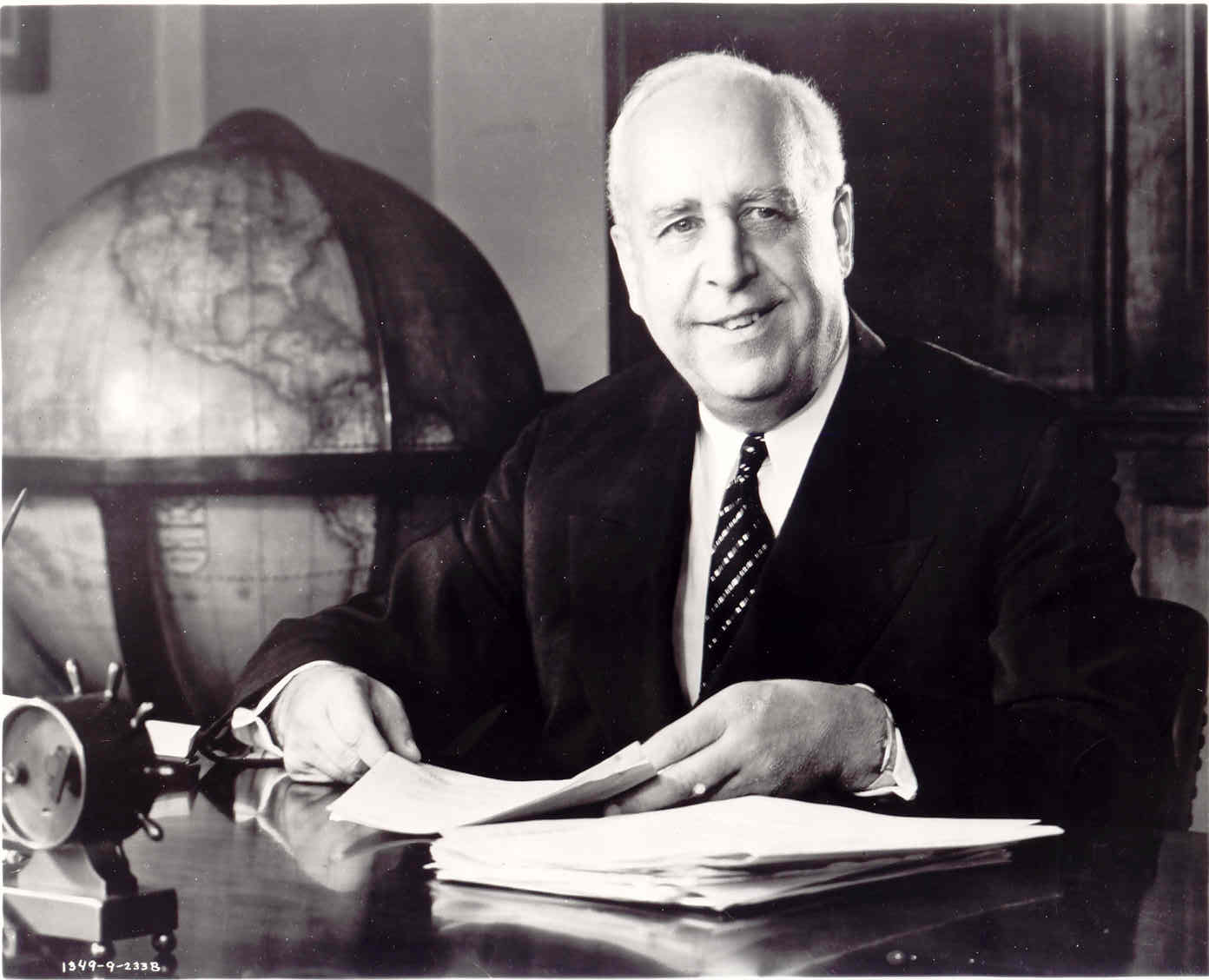
Paul Weeks Litchfield — vice president of production at the Goodyear Tire & Rubber Company and, later, its long-serving president and chairman — was a man who solved problems at industrial scale. In the mid-1910s, his problem was tire cord fabric.
Early automobile tires were reinforced with woven cotton fabric. The strongest, most durable cord came from Pima (extra-long-staple) cotton, a variety botanically related to Egyptian Gossypium barbadense. American tire makers had been importing this cotton from Egypt, but the volatility of World War I threatened that supply chain at exactly the moment demand for military vehicles and aircraft was surging. Goodyear needed a domestic source — and it needed one fast.
Egyptian Cotton & the Salt River Valley Solution
Agricultural surveys pointed Litchfield toward the Salt River Valley of south-central Arizona. The climate was nearly identical to Egypt's Nile Delta: hot, dry, intensely sunny, with access to irrigation water from the newly completed Roosevelt Dam (1911). Experiments had already shown that long-staple cotton thrived here. In 1916, Goodyear moved decisively. The company purchased approximately 16,000 acres of desert land in the Agua Fria River basin, west of Phoenix.
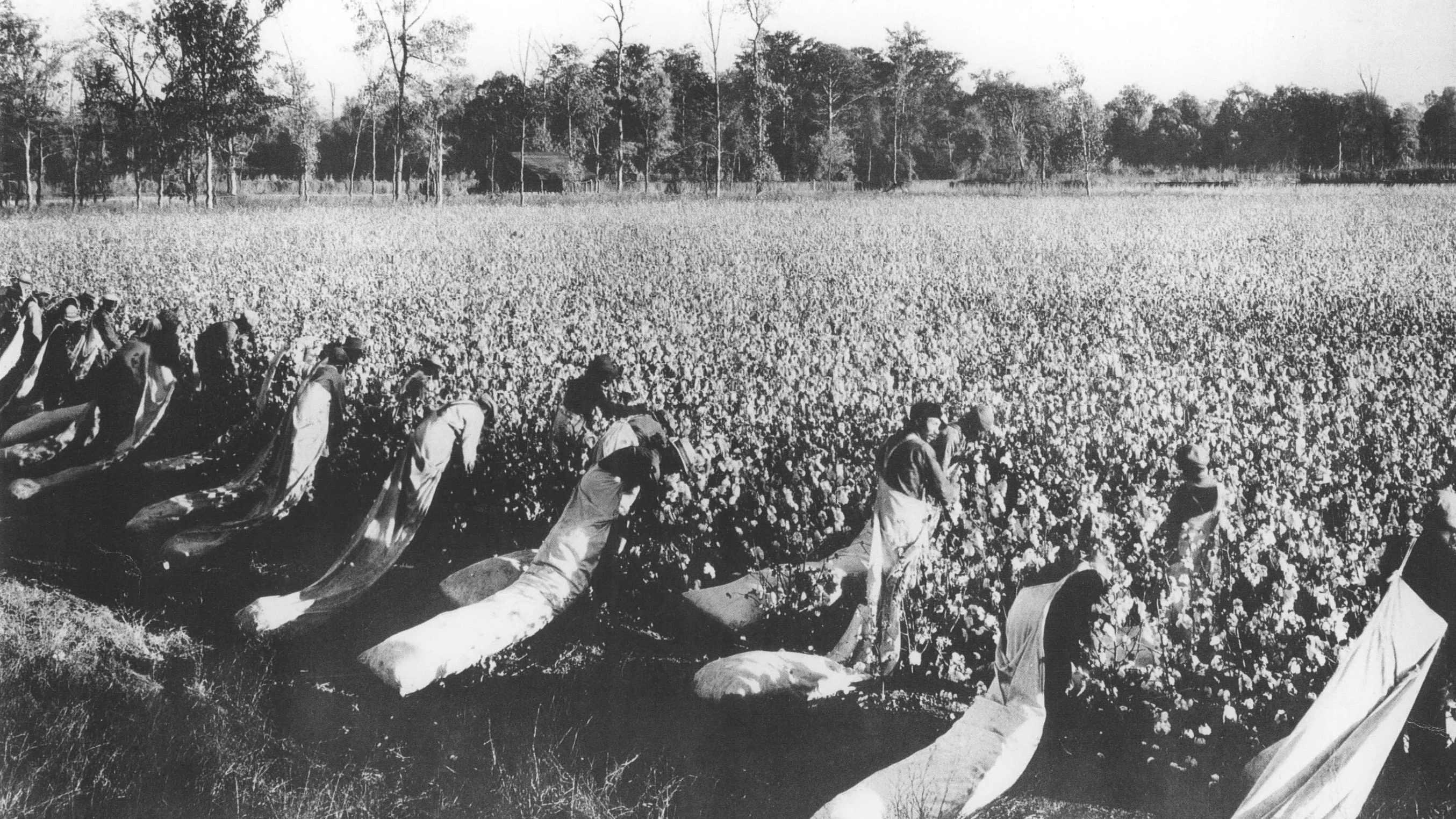
Goodyear Farm: Key Facts
- ~16,000 acres purchased by Goodyear in the Agua Fria basin, 1916
- Cotton variety: extra-long-staple Pima / Egyptian-type Gossypium barbadense
- Water rights secured via irrigation canals fed by the Agua Fria and Salt Rivers
- Peak wartime output supplied tire-cord fabric for Allied military vehicles & aircraft
- The town and surrounding area named for Paul Weeks Litchfield personally
It was an audacious bet. The land was raw desert. There were no roads, no utilities, no housing, and no water infrastructure beyond what Goodyear would build from scratch. Litchfield and Goodyear were not merely buying farmland — they were committing to building an entire community capable of attracting and retaining a skilled agricultural and industrial workforce in one of the most inhospitable climates in North America.
Building a Company Town from Scratch: 1916–1920s
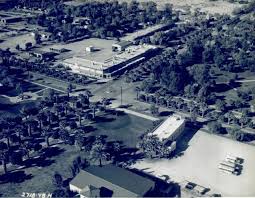
What Goodyear constructed between 1916 and the early 1920s was, by the standards of any era, remarkable. Litchfield Park was platted as a proper company town — a planned community with orderly streets, employee cottages, a school, a church, administrative offices, a post office, a store, and recreational facilities. Goodyear imported engineers, agronomists, and laborers, housing them in accommodations that, by the rugged standards of desert homesteading, were genuinely comfortable.
The town's layout reflected an almost paternalistic corporate philosophy that was common among industrial towns of the Progressive Era. Goodyear wanted workers to stay — the investment in irrigating the desert and cultivating cotton was too large to risk high turnover. So the company invested in quality-of-life infrastructure: shaded streets planted with eucalyptus and citrus, modest but solid bungalow housing, and facilities for recreation and socializing.
Litchfield Park was not an accident of geography — it was a calculated act of corporate will, a deliberate attempt to transplant the productive capacity of the Nile Delta into the heart of the Sonoran Desert.
— Arizona Cotton Growers Association, historical retrospectiveBy the early 1920s, the cotton operation was producing significant yields. The Goodyear Farms operation became one of the largest cotton-growing enterprises in the American West. The crop was ginned locally, the fibers compressed into bales, and the lint shipped to Goodyear's tire-cord fabric mills. The seeds yielded cottonseed oil and cattle feed, making the operation nearly self-sufficient.
World War I ended in 1918, but Goodyear's Arizona investment did not. The automobile boom of the 1920s meant that demand for tire cord fabric kept growing. And Litchfield — the man, now climbing toward Goodyear's presidency — remained deeply attached to the Arizona project he had championed.
The Wigwam Resort: From Bunkhouse to Arizona Icon
No single landmark defines Litchfield Park history more powerfully than The Wigwam Resort. Its evolution from a utilitarian guesthouse into one of Arizona's most celebrated luxury retreats mirrors the broader arc of the community itself.
The Organization House (1918): Hospitality Begins
In 1918, Goodyear constructed what it called "The Organization House" — a simple, functional structure designed to accommodate company executives, visiting managers, and important guests traveling to the remote farming operation. The Arizona desert in 1918 was not an easy place to visit; rail connections were limited and the nearest hotel of any quality was in downtown Phoenix, a meaningful journey over unpaved roads.
The Organization House filled a practical need. It was not conceived as a resort. It had no golf courses, no swimming pools, no fine dining. It was an executive guesthouse in a cotton town, offering clean rooms, reliable meals, and a comfortable base from which to inspect the fields and review operations.
But the Arizona winter climate — sunny days, cool evenings, brilliant blue skies stretching over mountains and desert — had a way of seducing visitors. Goodyear executives and their guests began extending their stays. Word spread quietly through corporate and social networks: that Goodyear property in Arizona was a genuinely pleasant place to spend a winter week.
Opening to the Public (1929): A Resort is Born
Recognizing an opportunity, Goodyear transformed the Organization House into a proper resort and opened The Wigwam to the general public in 1929. The name — informal, evocative, slightly mysterious — was chosen to capture the romance of the American Southwest. The newly opened resort featured adobe-style casitas arranged around lush courtyards, a design vocabulary drawn from Southwestern vernacular architecture that would prove enormously influential in Arizona resort design.
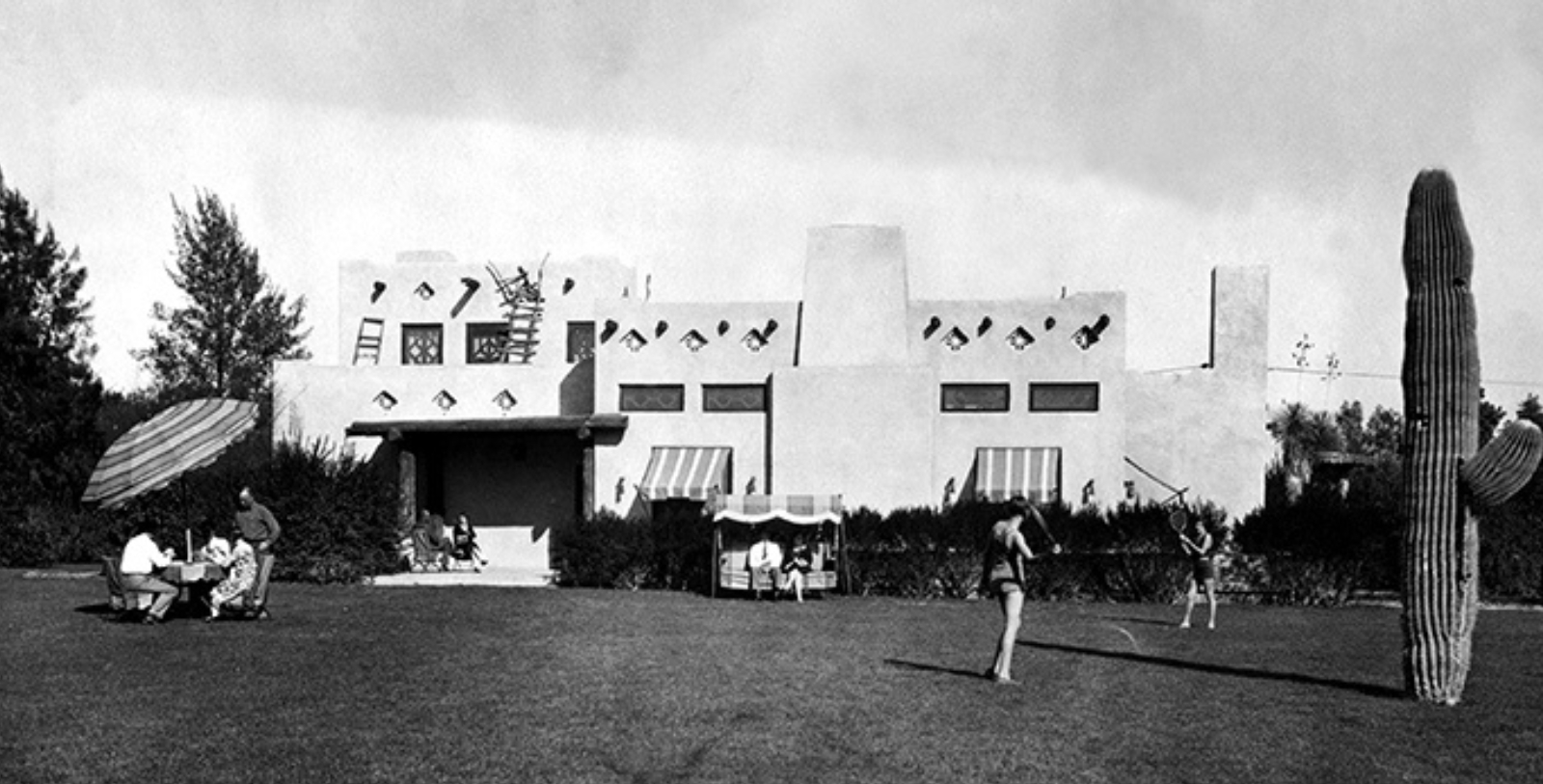
The timing was, superficially, terrible — 1929 was the year of the Wall Street Crash. But The Wigwam's clientele was drawn from precisely the stratum of American society least immediately devastated by the Depression: senior corporate executives, industrialists, financiers, and their families. The resort attracted a Who's Who of American business and eventually Hollywood, establishing a social cachet that would sustain it through the difficult 1930s.
Evolution Through the Decades: Golf, Celebrity & Preservation
The Wigwam grew steadily in ambition and reputation through the mid-twentieth century:
- Golf arrives: The resort developed its celebrated golf courses, which became central to its identity. The Red and Blue courses — later joined by the Gold Course — attracted serious golfers and enhanced The Wigwam's national profile as a destination resort.
- Celebrity guests: The Wigwam hosted a remarkable roster of notable guests over the decades, including U.S. presidents, Hollywood stars, and captains of industry. Its remote but accessible location made it ideal for those seeking privacy alongside comfort.
- AAA Five Diamond recognition: The resort earned AAA Five Diamond status, placing it among the very top tier of American luxury resorts — a designation it has held for decades, making it one of Arizona's most consistently honored properties.
- Ownership transition: After Goodyear eventually divested its Arizona agricultural holdings, The Wigwam passed through several ownership phases while maintaining its character and historical identity.
- Renovation & continuity: Major renovations in the late 20th and early 21st centuries refreshed the resort's facilities while preserving the Spanish Colonial Revival architecture and the low-slung casita layout that give it such distinctive character.
Today, The Wigwam Resort remains a fully operational luxury property — a rare case of a historic Arizona landmark that has survived, adapted, and continued to thrive rather than becoming a ruin, a museum, or a ghost.
Historic Landmarks & the Character of Old Town Litchfield Park
The term "Old Litchfield Park" or "Old Town Litchfield Park" refers informally to the original core of the company-town plat — the compact, walkable downtown district that retains the most visible physical evidence of the community's early-twentieth-century origins. This area, centered roughly along Litchfield Road and the streets immediately surrounding it, offers a remarkably intact tableau of early Arizona planned-community design.
Key Sites in the Historic Core
The Wigwam Resort is the anchor and the most architecturally significant survivor. Its grounds, landscaping, and core buildings represent a continuous thread stretching back to the 1920s and 1930s.
The Luke-Greenway House (also referenced in local records as key early residential architecture) and several of the original bungalow streetscapes along the town's older residential blocks preserve a sense of the scale and material character of the Goodyear-era community.
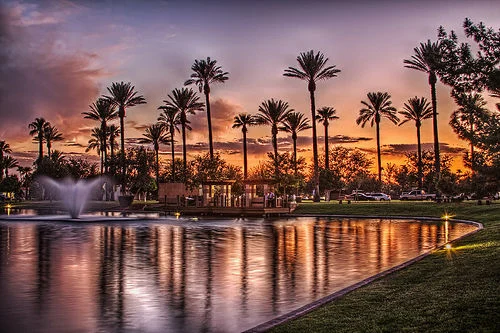
Litchfield Park City Park — the central green space in the downtown core — occupies land that has served community gathering functions since the town's earliest decades. Its mature tree canopy, including notable specimens of eucalyptus, palm, and citrus descended from early Goodyear plantings, gives it an age and character unusual in the West Valley.
The local commercial streetscape along and near Litchfield Road features a collection of low-scale commercial buildings, many repurposed or sensitively adapted from mid-century structures, now occupied by locally owned boutiques, restaurants, art galleries, and specialty shops. The walkable scale and the absence of big-box retail creates an atmosphere conspicuously different from surrounding communities.
Historic Timeline at a Glance
- 1916 — Goodyear purchases ~16,000 acres; Litchfield Park established as company town
- 1918 — Organization House constructed; first church and school built
- 1929 — The Wigwam Resort opens to the public
- 1930s — Resort attracts national business elite; golf courses added
- 1941–45 — Luke Air Force Base established nearby; wartime role grows
- 1960s–70s — Goodyear begins divesting agricultural holdings; residential growth accelerates
- 1987 — Litchfield Park officially incorporated as a city
- Present — Historic district preserved; Wigwam Resort continues operation
A Century of History: Litchfield Park's Timeline
Paul Weeks Litchfield and Goodyear Tire & Rubber purchase ~16,000 acres in the Agua Fria basin. The company town is platted, streets laid out, and irrigation infrastructure begun. Long-staple Egyptian-type cotton planted for the first time in scale.
Goodyear builds a guesthouse for executives and visitors. A school and church are also constructed, signaling the town's intent as a permanent, family-oriented community rather than a seasonal labor camp.
Goodyear transforms its executive guesthouse into a public resort. Adobe casitas, desert landscaping, and impeccable winter-season service quickly attract the American corporate elite. The Wigwam earns a national reputation.
Luke Field — later Luke Air Force Base — opens just north of Litchfield Park, bringing an enormous military presence to the West Valley. The town's strategic importance shifts alongside its neighbor.
Goodyear gradually sells off its farmland as Phoenix's suburban expansion reaches the West Valley. Cotton farming declines; residential subdivisions and light industry replace fields. Litchfield Park preserves its core town plan while the surrounding area transforms.
After more than seven decades as an unincorporated company town, Litchfield Park formally incorporates as an Arizona city. This milestone gives the community legal independence, planning authority, and an official civic identity independent of the Goodyear corporation.
Old Town Litchfield Park develops as a distinct cultural and commercial destination within the West Valley. The Wigwam Resort undergoes significant renovation. Annual events, local businesses, and heritage tourism reinforce the community's unique identity.
From Goodyear's Company Town to Incorporated City (1987)
For most of the twentieth century, Litchfield Park existed in a somewhat unusual civic condition: a fully functioning, well-maintained community with streets, schools, churches, parks, and a world-famous resort, yet without the formal governmental structure of an incorporated municipality. It was, in the truest sense, a company town — its governance, maintenance, and planning functions carried out largely through Goodyear's corporate administration.
This arrangement worked reasonably well as long as Goodyear remained invested in the Arizona operation. But as the postwar decades brought suburbanization, agricultural divestment, and the gradual retreat of Goodyear's direct corporate presence from the community, the need for formal civic self-governance became apparent. Residents needed the ability to zone their own land, manage their own services, and chart their own planning future — especially as the explosive growth of metropolitan Phoenix began pressing in from the east.
On January 1, 1987, Litchfield Park officially incorporated as an Arizona city. The incorporation was, in a sense, the community's formal declaration of independence — its assertion that it was a real town with a real future, not merely the residual footprint of a corporate agricultural project.
Incorporation also gave the new city a critical tool: the ability to enact its own zoning and development standards. This would prove essential to preserving the human scale, tree canopy, architectural character, and walkability of the historic core against the pressures of suburban sprawl that were rapidly transforming the surrounding West Valley.
Old Litchfield Park Today: History You Can Actually Visit
The phrase "Old Litchfield Park" carries no official municipal designation — there is no formally drawn historic district boundary on city maps. But it functions as a meaningful geographic and cultural shorthand for the original company-town core: the blocks immediately surrounding Litchfield Road, the City Park, and The Wigwam Resort, where the built environment most directly reflects the community's origins.
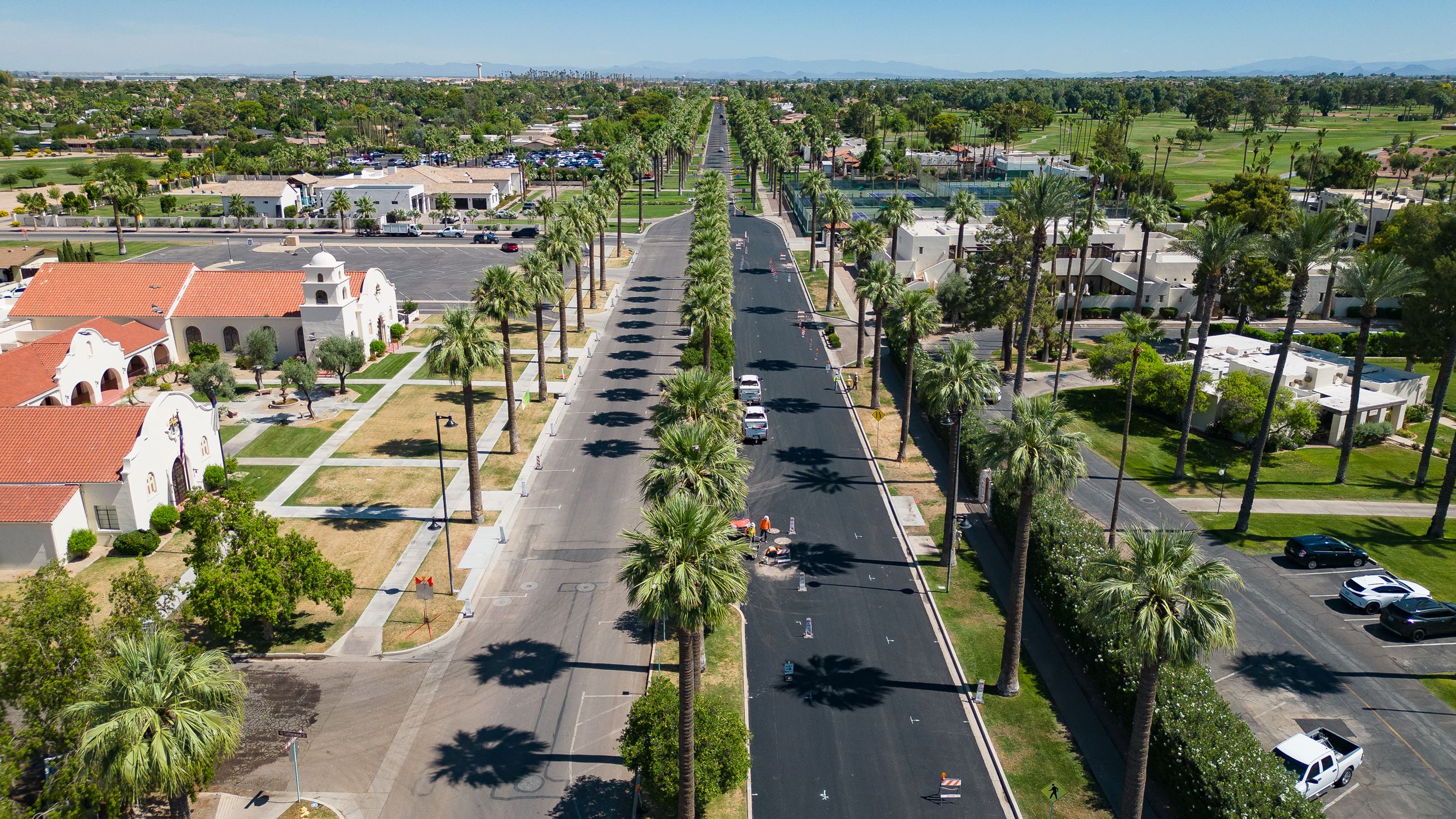
What to See & Do in the Historic Core
- The Wigwam Resort — Even if you're not a guest, the resort's grounds are worth exploring. The mature desert landscaping, the Spanish Colonial Revival architecture, and the three golf courses convey the aspirations of the community's founders in vivid physical form. wigwamarizona.com
- Litchfield Park City Park — A gathering place since the 1920s, the park offers shade, open lawn, and a sense of the original town's civic ambitions. The mature trees are remarkable by Phoenix-area standards.
- Old Town commercial district — A curated collection of independent shops, art galleries, and restaurants occupying a walkable, human-scaled streetscape. The antithesis of the strip-mall sprawl dominating much of the West Valley.
- Annual events — The Litchfield Park Festival of the Arts (held annually since the 1970s) draws artists and visitors from across the region and is one of the oldest outdoor fine arts festivals in Arizona. The Christmas in the Park celebration and the Wigwam's seasonal events also anchor the community calendar.
- Historic residential streets — A walk through the older residential blocks east and south of the park reveals bungalows and ranch-style homes built during the community's mid-century transition from company town to residential suburb, on a street grid established by Goodyear's original 1916 planners.
The Living Legacy of Paul Weeks Litchfield
Paul Weeks Litchfield (1875–1959) served as Goodyear's president from 1926 to 1940 and chairman from 1940 to 1956 — a reign that made him one of the most consequential figures in American industrial history. He was also, by all accounts, deeply attached to the Arizona project that bore his name. The community of Litchfield Park is, in a very real sense, his monument: not a factory or a corporate campus, but a livable town conceived with genuine care for the humans who would inhabit it.
The neighboring city of Goodyear, Arizona — now one of the fastest-growing cities in the United States — takes its name directly from the corporation whose cotton operations established both communities. Together, Litchfield Park and Goodyear represent one of the most unusual origin stories in American urban development: two cities born from a single industrial decision made a century ago in an Akron boardroom.
In a region where history often means 'thirty years ago,' Litchfield Park offers something genuinely rare: streets that were platted in 1916, trees planted in the 1920s, a resort that opened in 1929, and a community that has managed — against considerable odds — to keep its story legible in its landscape.
Ready to Experience Old Litchfield Park in Person?
Whether you're a history enthusiast, a West Valley resident discovering your own backyard, or a visitor planning an Arizona itinerary, Old Litchfield Park rewards a half-day of exploration — and The Wigwam rewards considerably longer.
Frequently Asked Questions
Common Questions About Litchfield Park History
Litchfield Park was established in 1916 by the Goodyear Tire & Rubber Company, under the direction of company executive Paul Weeks Litchfield. Goodyear purchased approximately 16,000 acres of desert land in the Agua Fria basin west of Phoenix to grow long-staple cotton for tire-cord fabric — a critical wartime material. The town was named for Paul Litchfield personally. It operated as a company town until formally incorporating as an Arizona city on January 1, 1987.
The building that would become The Wigwam Resort was first constructed in 1918 as "The Organization House" — a Goodyear executive guesthouse serving the cotton farming operation. It was not open to the general public at that time. In 1929, Goodyear transformed and expanded the property into a proper resort hotel and opened it to paying guests under the name The Wigwam. The resort has operated continuously since then, earning AAA Five Diamond status and hosting generations of notable guests from business, politics, and entertainment.
Goodyear grew extra-long-staple (ELS) cotton — a variety botanically related to Egyptian Gossypium barbadense, sometimes called Pima cotton — in Arizona because it was the strongest, most durable cotton available for weaving tire-cord fabric. Before World War I, Goodyear imported this cotton from Egypt, but wartime supply disruptions threatened that source. Agricultural surveys showed the Salt River Valley's climate was nearly identical to Egypt's cotton-growing regions. The company chose Arizona's Agua Fria basin and began large-scale ELS cotton farming in 1916. The operation was enormously successful and continued well past the war's end.
Litchfield Park incorporated as an Arizona city on January 1, 1987, more than 70 years after it was established as a Goodyear company town in 1916. For most of its existence, the community was administered through Goodyear's corporate structure rather than a formal municipal government. Incorporation gave residents local self-governance, zoning authority, and an independent civic identity — a crucial tool for preserving the community's historic character against the pressure of surrounding suburban development.
"Old Litchfield Park" refers informally to the original company-town core — the walkable, historic downtown district centered on Litchfield Road, City Park, and The Wigwam Resort. Unlike most of the surrounding West Valley, this area retains a human-scaled streetscape, mature tree canopy, and architecture reflecting its early-20th-century origins. Visitors today can explore The Wigwam Resort (a luxury hotel open to guests and day visitors), stroll City Park, browse locally owned shops and galleries, dine at independent restaurants, and attend annual events like the long-running Festival of the Arts. It's one of the most distinctive historic destinations in metropolitan Phoenix.
No — they are two distinct, separately incorporated cities, though they share a common origin. Both Litchfield Park and the neighboring City of Goodyear trace their existence to the Goodyear Tire & Rubber Company's 1916 Arizona agricultural operation. Litchfield Park is the original, planned company-town core — today a small, historically preserved city known for its walkable downtown, The Wigwam Resort, and distinctive character. Goodyear is a much larger, rapidly growing suburban city that developed on the broader surrounding agricultural land. Litchfield Park is named for company executive Paul Weeks Litchfield; Goodyear is named for the corporation itself.
Recommended Links & Further Reading
-
Official Resort Website
The Wigwam Resort — wigwamarizona.com
Best placed inline when first mentioning the resort and again in the Today/Visit section. -
City Government
City of Litchfield Park Official Site — litchfieldparkaz.gov
Ideal link in the incorporation and "today" sections; also footer reference. -
State Historical Archive
Arizona Historical Society — arizonahistoricalsociety.org
Reference when citing historical photographs, cotton farming records, or archival documents. -
Digital Archive
Arizona Archives Online — azarchivesonline.org
Link near historical photograph captions or in a "Research Sources" sidebar for authority signals. -
Regional History
City of Goodyear — History Page
Cross-link when discussing shared Goodyear Tire origins; reinforces topical authority for West Valley history cluster.